Ibadan—Oyo State Police Command has arrested a man who allegedly
defiled his two under-aged biological daughters and two of his nieces, all
between 14 and 17 years.
The crime was allegedly committed at
Moniya in Akinyele Local Government Area of the state.
Though the suspect, a herbalist,
denied the incest allegation, saying he was being held for a crime he did not
commit, the confessions of the four girls took many people at the state police
headquarters, Eleyele, Ibadan by surprise as they narrated how the father had
sex with them at different times.
While parading the suspect,
identified as Tajudeen Awoniyi, Oyo State Commissioner of Police, Mr. Muhammed
Katsina, said the accused person had carnal knowledge of his own daughters
whenever he was drunk.
The commissioner alleged that the
suspect would give black soap to the other two nieces before having sexual
intercourse with them one after the other.
Nieces’ story
The children, aged between 14 and
17.
Speaking with newsmen yesterday, one
of the victims (names withheld), said: “My sister and I are the nieces to
Tajudeen Awoniyi.
“His daughters came to our house and
asked us to follow them to their place. On getting there, her father told us he
would give us soap by midnight which we must use to bathe.
“Around 1a.m., he woke me up, gave
me a black soap and asked me to go and take my bath. After taking my bath, I
went to him and he placed something under his tongue and asked me to sleep on a
bench.
“He had sex with me. Afterwards, I
was bleeding and he asked me to go to bed. By morning, he sent my sister and me
out of his house.”
The sister, who is about 16 years
old, corroborated the story, saying “after taking my bath at night, he tied my
mouth with cloth so that people would not hear me when I cried.
“He had sex with me afterwards and
by morning he sent me out of his house.”
He’s been sleeping with me since
last year—Daughter
One of his daughters also said: “My
father has been sleeping with me since last year. Whenever he comes home drunk,
he sleeps with me and my sister (names withheld). He had slept with me three
times now since last year.”
He once threatened my mother with
cutlass—Sister
Tajudeen
The suspect’s sister said: “When I
came back from where I travelled to, I did not meet my daughters at home. So I
asked the people around and I was told that my brother’s children came to my
house and my daughters went out together with them.
“I said they could not have slept in
my brother’s place because it has been a while I saw him. The next day as I was
about to pray around 6:30a.m., my brother showed up.
“I was scared because I usually get
scared when I see him since the day he threatened my mother with cutlass to
release his children for him when they were still little.
“So he told me that my daughters
slept in his place and he had asked them to go back the next day. It was not
until the third day that I saw my daughters. Someone staying around brought
them home.
“One of them was holding her tummy.
I later took them to the hospital where we found out about the incident and I
had to call the police.”
The victims, who dared their father
and told the police the whole story, further explained that they kept sealed
lips for fear of being beaten by the herbalist.
Beautiful
and sexy Edo-State born Nollywood actress, Christabel Egbenya has done so many
films since she came into the movie industry. She has talent and she has
brought it on in many of her films but like every actor, there are some roles
that still haunt or define their careers. For Christabel, her role in Room
202, where she got rather too cosy with Frank Artus hasn’t left the
tongues of some people who believed the actress really turned on the fire.
“
When they brought the script, I read it and they told me the people I would
sleep with in the movie. I just had to get into the character and I started
acting it out” she told Potpourri in a recent chat.
In
the film, she and Frank had to do many kissing scenes which they did with
passion and so much conviction that it was almost real.
“It’s
real. The kisses are real. In ‘Kingdom of Pleasure’, ‘Kingship’, Frank Artus
and I kissed and touched very well because he’s my friend. We were always on
set together and we talk once in a while, so we had to make it real” she
confesses.
“In
that film, Frank Artus came back from America and he was asked to marry his
late father’s wife, Ngozi Ezeonu who was much older, as tradition demanded. He
refused because he wanted me. So, he used to come to town to visit me and we
make love. In the movie, ‘King’s Throne’, I also did a raunchy role with Frank
Artus where it looked as if we had real sex, like he was really inside me and I
was enjoying it. Most people believed it was real, but the people who were in
there know that we didn’t do anything”, she added.
- See more at:
http://www.vanguardngr.com/2015/06/most-times-our-kisses-on-set-are-real-chrisabel-egbenya/#sthash.jChTykJo.dpuf
ABUJA— Embattled former governor of
Adamawa State, Admiral Murtala Nyako, yesterday, surrendered to anti-graft
agency, Economic and Financial Crimes Commission, EFCC, where he was quizzed
for more than 10 hours over allegation of money laundering running into N15
billion.
Nyako voluntarily returned to the
country following the exit of President Goodluck Jonathan. Nyako had before now
blamed his travails in the hands of security and anti-graft agencies on the
former President, whom he accused of persecuting him for saying that he
(Jonathan) committed genocide against the North-East in the name of fighting
Boko Haram.
Quizzed for 10 hours
it was learnt that Nyako, who returned from self-exile on
Saturday, was at the EFCC headquarters in Abuja where he was detained and
quizzed for over 10 hours, yesterday.
The former Chief of Naval Staff
reported to the EFCC around 10 am but was still with his hosts as at 8pm.
Neither the Chairman of EFCC,
Ibrahim Lamorde, nor its spokesman, Wilson Uwujaren, was available to speak on
when Nyako would be freed.
Shortly after being impeached from
office in July last year, the EFCC moved against Nyako but he outsmarted them
and fled to an undisclosed European country, where he had been taking refuge
until last Saturday.
In January, the EFCC declared him wanted
in connection with the diversion of state funds amounting to N15 billion. When
he could not be arrested, his son, Abdulaziz, was declared wanted in February
this year, claiming that his father used him to siphon state resources.
Several top officials, who worked
under Nyako, have also been questioned by the EFCC over alleged money
laundering but none has been prosecuted or convicted by the agency.
How it all began
Former Governor Nyako who was
impeached by the Adamawa State House of Assembly in February was declared
wanted alongside his son, Abdulaziz Murtala by the EFCC.
Charges against them, include
criminal conspiracy, stealing, abuse of office and money laundering.
In his reaction, Nyako blasted the
EFCC for declaring him wanted, saying the anti-graft agency’s latest ambush on
him was the last kicks of a dying horse, as President Goodluck Jonathan, would
soon be kicked out of office.
Nyako, who spoke through his media
assistant, Ahmed Sajoh, said: “I am not aware of being declared wanted. But
that is good. If you are wanted by a rogue system, it means you are a good
person. Has this government gone after anybody that is bad? They only run after
the good people and allow the bad people to roam around them, live happily and
enjoy whatever bad things they are doing.”
Nyako said then that he was not
surprised at the latest action of the EFCC and noted that many more Nigerians
would be declared wanted by the government.
The EFCC had in June 2014, shortly
before the former governor was impeached, frozen bank accounts belonging to
Adamawa State in what it then called a precautionary measure to safeguard the
state treasury amidst evidence of looting uncovered by its operatives.
The commission had alleged massive
looting of the treasury by top officials of Adamawa State government under
Nyako, a development that, at the time, led to the arrest and questioning of
key officials, including then Secretary to the State Government, State
Commissioner for Finance, Commissioner for Higher Education, Accountant-General
of the State and the Permanent Secretary, Ministry for Local Government.
The EFCC said at the time that its
investigation was triggered by petitions alleging massive looting of the
treasury by the governor and his cronies through an illegal department called
Special Programme and Project Units, SPPU, which engaged in over invoicing and
inflation of contracts.
If you ask Thomas Corley, being rich has very little to do with luck and everything to do with habits.
Corley, who spent five years monitoring and analysing the daily
activities and habits of people both wealthy and living in poverty (233
wealthy and 128 poor, specifically), isolated what he calls “rich
habits” — and many of them are simply patterns of thought.
1. Rich people believe their habits have a major impact on their lives.
Wealthy people think that bad habits create detrimental luck and that
good habits create “opportunity luck,” meaning they create the
opportunities for people to make their own luck.
2. Rich people value relationships for professional and personal growth.
Not only do rich people feel that their relationships are critical to
their success, but they put a lot of effort into maintaining them,
making a habit of calling up contacts to congratulate them on life
events, wish them a happy birthday, or reaching out just to say hello.
3. Rich people love meeting new people.
Hand in hand with valuing relationships comes making new ones. Rich
people both love meeting new people and believe that being liked is
important to financial success.
4. Rich people think that saving is hugely important.
“Being wealthy is not just making a lot of money,” explains Corley.
“It’s saving a lot, and accumulating wealth. Many of the people I
studied aren’t wealthy because they made a lot, but because they saved a
lot.”
5. Rich people feel that they determine their path in life.
Poor people are significantly more likely to believe that genetics
are important to becoming wealthy, and significantly less likely to
believe that they’re the cause of their own financial status in life.
“Most of the wealthy people I talked to were businesspeople who
weren’t always wealthy,” Corley explains, “but they had this attitude
that they could do anything.
6. Rich people value creativity over intelligence.
While rich people are more likely to believe that creativity
influences success, poor people are more likely to think that being
“intellectually gifted” is critical.
They’re also more likely to believe that wealth is usually
accidental. If you look at my stats, you’ll find that a lot of wealthy
people were C students,says Corley. There’s more to wealth than just
being smart.”
7. Rich people enjoy their jobs.
Many of the wealthy in my study loved their job — it’s not an accident, says Corley.
These people found a creative pursuit that could turn into monetary
value. When you engage in a creative pursuit that can make money, the
rewards are often obscene.
8. Rich people believe that their health influences their success.
One of the individuals in my study told me ‘I can’t make money in a
hospital bed,’Corley remembers. “Wealthy people think that being
healthy means fewer sick days, which translates into more productivity
and more money.”
9. Rich people are willing to take risks.
A lot of the wealthy people in the study were business owners who started their own businesses, Corley explains.
They became successes because they were master self-educators who
learned from the school of hard knocks. Failure is like scar tissue on
the brain, Corley says. The lessons last forever.
President-elect, Muhammadu Buhari on Thursday received the handover notes from the outgoing President Goodluck Jonathan.
The exercise took place inside the Council Chamber of the Presidential Villa, Abuja.
Jonathan had earlier conducted the President-elect round the seat of power.
He presented an executive summary of his handover notes and a copy of
the National Conference report to Buhari in the presence of All
Progressives Congress chiefs who witnessed the event.
The outgoing President, who spoke after the presentation, said his administration had done its best for the country.
On his part, the President-elect said he would not make an official statement until after studying the handover notes.
He commended Jonathan for conceding defeat in the March 28 presidential election.
Hanergy Thin Film Power Group has finally got an investigation from
Hong Kong’s Securities & Futures Commission, as the sudden crash of
the company’s stocks preceded by several months of inexplicable rise
raises questions about the firm.
Hong Kong regulators said in a short statement on its website that a
formal investigation into Hanergy Thin Film is “in progress and is
continuing.” The statement also comes after Li Hejun, chairman of the
solar company, told the official Xinhua News Agency that a probe into
the company was “purely rumor” and it was “absolutely impossible” that
he didn’t know about the investigation.
Shares of Hanergy were halted Wednesday last week after plunging 47%.
Their stunning rise over the past few months has made Li China’s
second- richest man, after real estate tycoon Wang Jianlin.
Caixin, an influential economic journal, reported that Haitong
Securities led the selloff, after learning Hanergy failed to repay its
debt. Li himself was absent from the company’s annual meeting that day.
The firm has said that he was at the opening ceremony of a clean energy
exhibition.
In a move further raising doubt about what happened to Hanergy, Li
increased his short position in the firm by 796 million shares- just
five days before the massive tumble.
A murder investigation has been
launched into the death of blues legend BB King after two of his
daughters claimed he was poisoned.
Karen Williams and Patty King
said the musician was given "foreign substances to induce his premature
death" by his business manager Laverne Toney.
Lawyers for King's estate said the claims are unfounded and disrespectful.
But the possibility of homicide will now be investigated by the coroner and police in Nevada.
"Our coroner takes jurisdiction over #BBKing body, performs autopsy," the Clark County Coroner's office wrote on Twitter on Monday.
Coroner
John Fudenberg told CNN that the initial autopsy results found "no
evidence to substantiate the allegations" made by King's daughters.
However, he added that full forensic results would take six to eight weeks to arrive.
'Ridiculous' claims
King died in his sleep at his Las Vegas home on 14 May, aged 89.
At the time, his doctor and the coroner said he had died of a series of small strokes connected to his Type 2 diabetes.
But
the guitarist's daughters alleged that King's personal assistant Myron
Johnson and Toney gave him medication to induce diabetic shock.
The women added that "King was
sequestered from all family members" in the week before his death, and
that Toney and Johnson were the only people with him.
Toney, who is the executor of King's estate, shrugged off the daughters' claims.
"They've been making allegations all along. What's new?" she told the Associated Press.
A lawyer for King's estate also dismissed the accusations as "ridiculous".
"I
hope they have a factual basis that they can demonstrate for their
defamatory and libellous allegations," Brent Bryson said in a statement.
Earlier
this year, Patty King, Karen Williams and a third daughter, Rita
Washington, went to court accusing Toney of neglect, but the case was
dismissed because of a lack of evidence.
Funeral
King was born on 16 September 1925 to sharecroppers and worked in the cotton fields as a child before picking up the guitar.
Considered
one of the world's greatest players, he was known for his sharp single
notes and vibrato on the electric guitar he christened Lucille.
Known
for songs such as The Thrill Is Gone, Three O'Clock Blues and Darlin'
You Know I Love You, he influenced generations of guitar players, and
was inducted to both the Blues Foundation Hall of Fame and the Rock and
Roll Hall of Fame.
He was married twice and had 15 natural and adopted children, 11 of whom are still alive.
His funeral is scheduled to be held on Friday in Mississippi.
The Clark County coroner said his investigation would not delay the service.
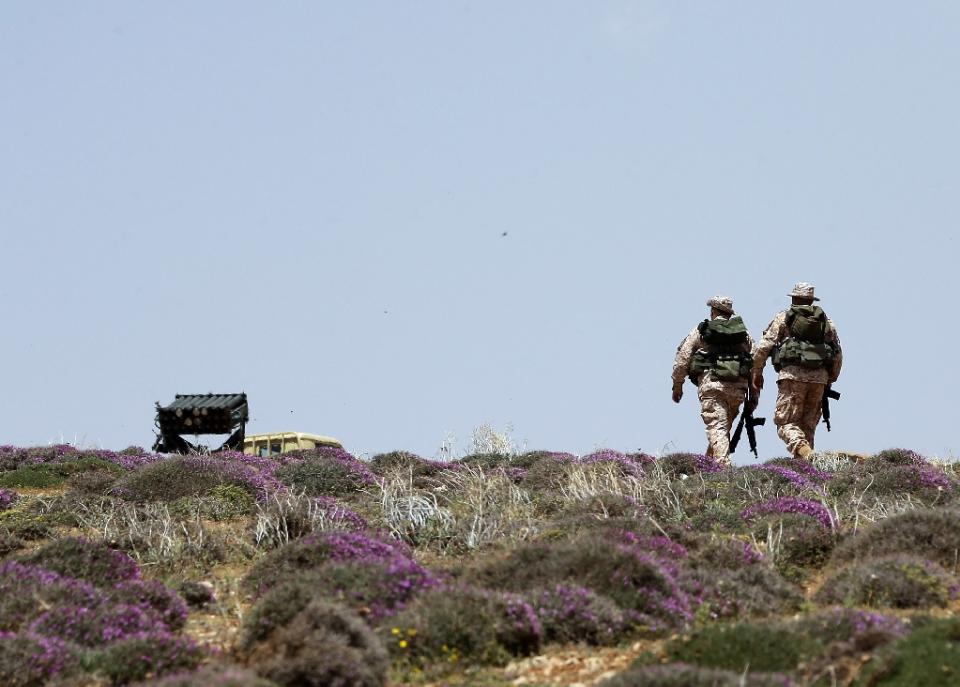
Tehran (AFP) - A senior Iranian
military official warned on Thursday that any Israeli attack would
unleash a firestorm of missiles on its cities fired by the Islamic
republic's Hezbollah allies in Lebanon.
The
Shiite militia has more than 80,000 rockets ready to fire at Tel Aviv
and Haifa, said General Yahya Rahim Safavi, military adviser to Iran's
supreme leader Ayatollah Ali Khamenei.
"Iran,
with the help of Hezbollah and its friends, is capable of destroying
Tel Aviv and Haifa in case of military aggression on the part of the
Zionists," he said, quoted on state television.
"I don't think the
Zionists would be so unintelligent as to create a military problem with
Iran," the general said. "They know the strength of Iran and
Hezbollah."
Last week, a senior Israeli military intelligence
official warned of a heightened threat of conflict over the next two
years as a result of "escalation" in the region.
In
a briefing to foreign journalists at the defence ministry in Tel Aviv,
the official referred specifically to Hezbollah, with whom Israel fought
a month-long war in 2006, and to Iran's arming of the group.
"The
Iranian threat is a tangible threat to Israel," said the official,
whose country has not ruled out the use of military force to block any
attempt by Tehran to produce a nuclear bomb.
Israel
has opposed the efforts of world powers to strike a deal with Iran
curbing its nuclear programme in return for an easing of economic
sanctions, saying that Tehran cannot be trusted.
Iran
has long asserted that its nuclear programme is for peaceful energy
purposes, and that international concern about it seeking a nuclear bomb
is misplaced.
Not many in her homeland appear to know about her unique story.
But in other lands, especially Europe and America, she is a ‘goddess’
whose works are cherished by kings and presidents.
Without a doubt, the story of Nike Okundaye, the face behind the huge
success story of Nike Arts Gallery, located in Lagos, Abuja and Osogbo,
is as compelling as it is inspiring.
At a time when young Nigerians are in desperate need of a role model and
inspiration in what self-belief and hard work can achieve, Nike’s rise
from the status of an unknown village girl born into a seeming
insignificant family in a rustic village to a globally celebrated icon
would make an A-list inspirational novel.
Born in her native village of Ogidi, Ijumu Local Government Area, Kogi
State, young Nike had high dreams about what type of future she wanted
for herself. But her dreams were truncated even before they could take
form when she lost her mother at age six. “I was six when my mother
died,” she said with a tinge of sadness.
With the blow inflicted on her dreams by her mother’s death, young Nike
was taken away to live with her grandmother. At the time, many believed
that by going to live with an old woman, the young girl’s future had
been compromised. But events have since proved that destiny may indeed
have been at work in her journey through life.
She had her first contact with the world of arts through her
grandmother, who at the time, was the leader of cloth weavers in the
community.
She said: “I come from a family of craftsmen. My parents were crafts
people from Ogidi in Ijumu Local Government Area, Kogi State. My life as
an artist is something that I was born with. I started weaving at the
age of six.
“I started with weaving different things, including adire, a traditional
Yoruba hand-painted cloth design. As a matter of fact, I can say
everything that had to do with textile. They taught me how to weave,
using a little calabash. Gradually, I graduated to using bigger
materials.”
Though Nike was six years old and barely able to tell the difference
between her left and right hands, she already had a picture of the kind
of future she wanted.
“My grandmother was the head of all the weavers in our community. So,
even as a little child, I already had a dream that I would own a big
studio when I grew up. People came from different areas to buy the cloth
from her. So, at that time, I already sensed that I might not have the
opportunity to go to school.”
With the death of her mother, her grandmother, whose responsibility it
was to look after her, did not pamper her in any form. She ensured that
the virtue of hard work was instilled in Nike’s young, impressionable
mind.
At that time, young Nike, unaware of the reason behind her great
grandmother’s action, would cry, believing that she was being
unnecessarily punished. “I would cry and lament because I thought she
was wicked and punishing me. But today, I always thank her for
inculcating in me the virtue of hard work. It was through her that I
learnt that you must persevere in whatever you do and never give up on
your dreams.”
Although she lost her mother at a time she needed her most, Nike
believes that destiny might have been involved in the way her life
played out, including her mother’s death. According to her, the mother
was a very hard working young woman who would have spared nothing to
ensure that her child got a good education up to the university level.
“Even at that young age, I knew that my mother was very hard working.
And I am very sure that if she had not died, she would have trained me
up to university level. My father was a farmer. He also did several
other things like basket weaving to supplement his income. So,
definitely, I would have been educated very well if my mother had not
died.
“But today, I look at my childhood and all that I went through as
something designed by destiny. Who knows, maybe if my mother had not
died and I had gone ahead to be educated, I may never have had the kind
of opportunity that I have today and may never have risen to the level
that I am.”
Nike never went to school to study art, the vocation that has brought
her to global spotlight. Vocational training in art was passed down to
her by her great grandmother, the late Madam Ibikunle. Watching her
great grandmother in the art of adire textile processing and helping her
out, Nike walked up the line to become an expert in adire making,
dyeing, weaving, painting and embroidery.
A product of the famous Osogbo Art Movement, Nike is today a world
acclaimed artist and textile designer. She brings vivid imagination as
well as a wealth of history and tradition into the production of adire.
Her works are celebrated in major capitals of the world, with her
designs exhibited in countries like the USA, Belgium, Germany, Japan and
Italy, among others.
Nike spent the early part of her life in Osogbo, a recognised hotbed for
art and culture in Nigeria. During her stay in Osogbo, her informal
training was dominated by indigo and adire.
Nike’s romance with international exposure began in 1968 when she had an
exhibition at the Goethe Institute in Lagos. Since then, she has grown
to become a major name on the international art circuit. She is most
outstanding in paintings and design of adire, beadwork and batik.
Among Nike’s proudest achievements was her invitation to Italy by the
Italian government in 2000 to train young Nigerian sex workers on how to
use their hands to engage in creative ventures. Her invitation was as a
result of complaints to the Italian government by the young Nigerians
that they left Nigeria in search of work, not knowing what they would be
forced into. When Nike got to Italy, she taught them skills in craft
making and many of the women became self-reliant in no time and stopped
their old means of income.
In 2006, she was awarded one of the highest Italian national awards of
merit by the government of the Republic of Italy in appreciation of her
efforts in using art to address and solve the problems of Nigerian sex
workers in Italy.
About two years ago, her adire painting was accepted at The Smithsonian,
the world’s largest museum, located in Washington DC, US. Some of her
works can be found amongst the collection of prominent personalities
around the world, including the White House.
While little is known about Nike and her works across the country, two
former presidents of the USA, Bill Clinton and George Bush, were so
enthralled by her works at various times that they sought audience with
her during their visits to Nigeria. Much more than just meeting and
shaking hands with the two former presidents, it was Nike that decorated
George Bush’s room in Abuja during his stay in the country.
These two incidents, Nike told The Nation, were some of the best things to have happened to her.
She said: “When President Bill Clinton of the US visited Nigeria, he
asked to meet the woman behind Nike Gallery, and I was taken to Abuja to
meet him. It was the same thing with President George Bush. I was
invited to meet him in Abuja during his visit to Nigeria. I was the one
that decorated the room where the president stayed during the visit.
What honour can be greater than this? I feel accomplished.”
As an accomplished artist, Nike has taught in several universities in
the US, imparting the knowledge of her traditional adire designs in
thousands of eager students from across the world. Her teaching
exploits, she disclosed, have taken her to revered institutions like
Harvard and Edmonton in Canada.
“I have lectured and held workshops in several noble institutions across
the world. Some of the universities include Harvard, Columbus,
Edmonton, Ohio and in Los Angeles, among others. My first experience
with teaching was in 1974. At that time, I taught people with doctoral
degrees.”
Interestingly, all the education she had at the time, according to her,
was the traditional education that parents pass onto their children.
“The type of education I had at the time was the education that is
passed from parents to their children, not the education you get in a
classroom. It was the practical type of education,” she said with a wry
smile.
In 1983, she established the Nike Centre for Art and Culture in Osogbo,
Osun State, where trainings are offered free of charge to Nigerians in
various forms of arts. The centre was opened with 20 young girls who
were picked from the streets and offered a new life in arts. So far,
according to her, more than 3,000 young Nigerians have been trained at
the centre.
Nike OkundayeThe
centre also admits undergraduate students from many universities in
Nigeria for their industrial training programmes in textile design. The
centre now admits students from Europe, Canada and the United States of
America. International scholars and other researchers in traditional
African art and culture also visit the centre from time to time for
their research works on the processing of adire fabric and African
traditional dyeing methods.
But she says the true story of the gallery started in her bedroom about 47 years ago.
“The gallery you see today actually started in my bedroom in 1968. In
2008, we opened the one in Lagos, and my husband was always the
motivator. It was intended to give the young and old a platform to hear
their voice.”
As she spoke, with signs of fulfillment splashed on her face, her
husband, Reuben Okundaye, a retired commissioner of police, who had
remained quiet since the interview started, suddenly joined in the
conversation.
He said: “It is with practical education that she has continued to teach
and impart knowledge into people with doctoral degrees and masters in
Fine Art. Some of these people even come here under the cover of night
to seek advice from her. Yet, some would say she is not educated.”
Speaking about another experience, Mr. Okundaye said he once had an
encounter with a prominent Nigerian who told him that his wife would
have been made a minister of the Federal Republic of Nigeria if she was
educated. Surprised, he said he took a swipe at the man, telling him his
wife was better educated than most of the people that were being
flaunted.
He said: “You can imagine, I was discussing with one big man the other
day and he said that my wife would have been made a minister if she was
educated. I was angry and I asked him what he meant by that. Here is a
woman who teaches people with doctoral degrees in higher institutions
all over the world, yet you say she is not educated. But when the chips
are down, they come to her for advice.”
Asked how she feels whenever she teaches in the classroom, Nike looked
up as if relishing her achievements, and said: “I feel fulfilled. It was
a very high sense of fulfillment. Imagine, a little girl who grew up in
a rustic village without any sign of hope for a good future. Now I
stand before PHD holders and teach them. I have been invited to meet
presidents of foreign countries. I think I should be proud of my little
achievements and be grateful to God.”
In spite of her seeming low education, she insists she has no regrets
about not attending school. “I have no regrets at all. I give thanks to
God for making all these things possible for me. I also thank my husband
for standing by me all these years. I must confess that it was not easy
coming this far. You will agree with me that for a woman to be
recognised, she has to work three times harder than a man.”
Reechoing his wife’s position, Mr. Okundaye said Nike could not have had
any regrets, having attained the heights sought by many across the
world. “You asked if she has any regrets. How can that be possible? What
kind of regret was she supposed to have with all her achievements? She
is fulfilled in every sense of the word,” he enthused.
Expectedly, the couple was attracted to each other by their mutual love
for arts. Okundaye told The Nation how it all started: “I have always
been an arts lover. I have some of her works. Perhaps, like you said,
maybe it was destiny that brought us together.”
With a sterling career as a police officer, which saw him attaining the
rank of Commissioner of Police and serving in more than four states, the
couple has in the last 20 years of their coming together enjoyed the
beauty of marriage and weathered the storm together.
Nike, who would be 64 in a couple of weeks, has also successfully
created an identity for herself. Her most treasured clothes, she
confessed, are adire fabrics. And it is not surprising that she cannot
remember the last time she wore anything other than that.
“You may be right if you say I have created an identity for myself with
my adire clothes. It is the only thing that I am known with. I don’t
wear any other clothe, even when I travel out of the country,” she said.